Influencing your MP on safe routes: a step-by-step guide
Campaigning takes many forms — from signing petitions and protesting to creative stunts and artivism. But one of the most powerful ways to drive real change is by engaging directly with decision-makers.
Whether you have five minutes or five hours to give, this guide provides practical tips and tools to connect with your MP and make a difference for refugee families.
Use the quick links to jump to any section, or scroll through for the full toolkit:
Getting started
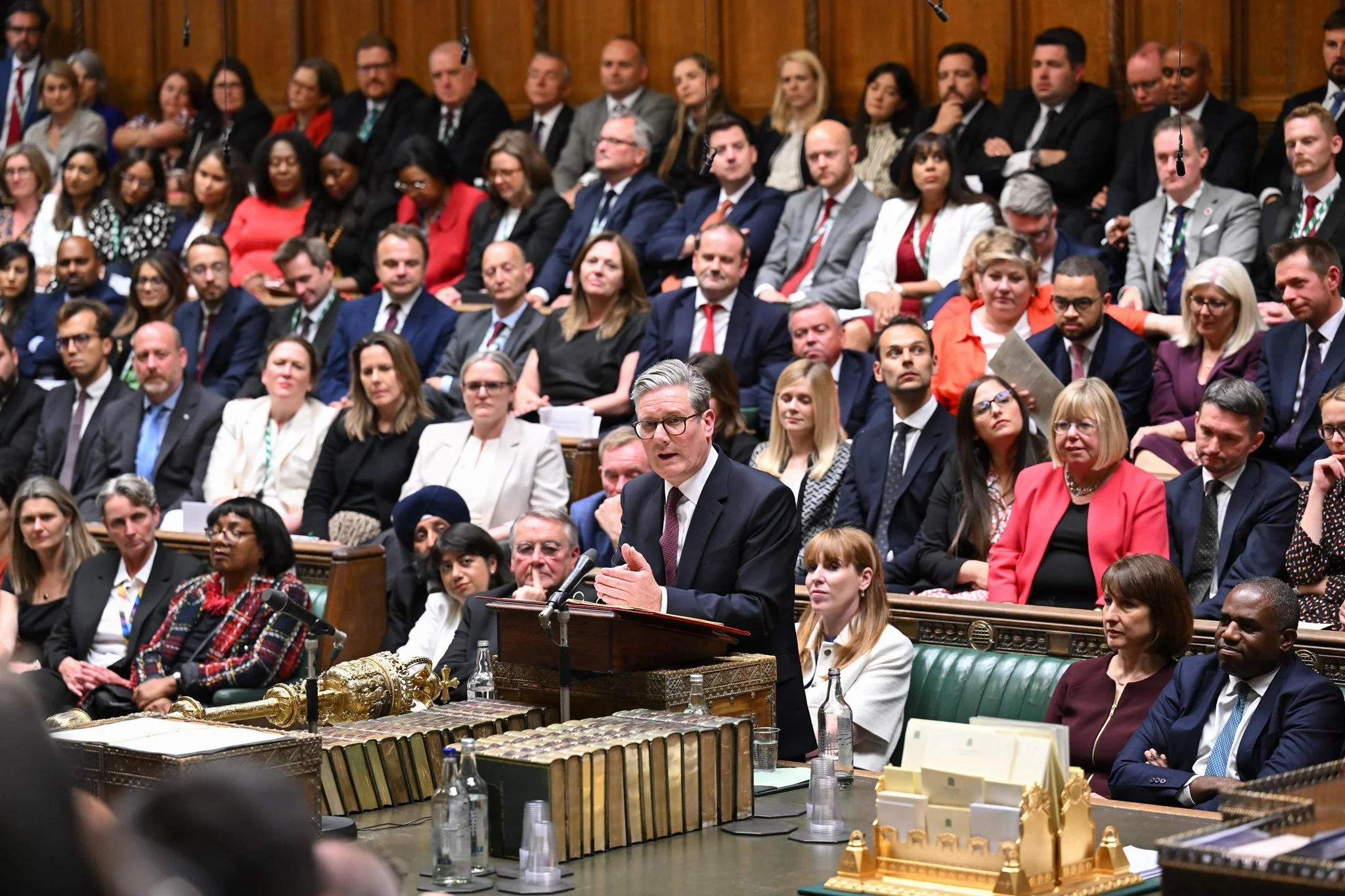
Photo: Keir Starmer addressing MPs, ©House of Commons
Whether or not you voted for your MP, they are elected to represent you, and they work for you. We need MPs to be bold and speak out for refugee rights and safe routes, including by raising our concerns and solutions in Parliamentary debates or behind closed doors, asking them to support (or oppose!) a Bill or amendments, speaking with other MPs, or pressing Ministers for positive changes.
There are a few ways you can get your MP’s attention, depending on how much time and resources you’ve got. Remember: MPs hold a lot of power, but so do you.
Expand the sections below to find out how you can influence your MP.
-
Sending a personalised and handwritten letter to your MP asking them to commit to a specific action can be a powerful tool. Even if you’re not up for a face-to-face meeting, you can still hand-deliver it to them for extra impact!
-
As a constituent and a voter, you are able to meet with your MP in person to discuss issues you care about. You could either arrange to go to their surgery, which are regular slots (usually Fridays or weekends) where MPs meet with constituents to hear their concerns, or request a private meeting.
-
Got an event about refugee rights lined up, like a celebration, a vigil or a talk? You can invite your MP to attend it too and hear their local communities’ stories and concerns.
-
MP are usually highly active on social media. Tag them on X, BlueSky or LinkedIn with an eye-grabbing message and try to get as many of your friends to do the same. We’ve included template messages later on in this pack.
We’ll walk you through all of these tactics in the next sections, so make sure to keep on reading!
Understanding safe routes and family reunion
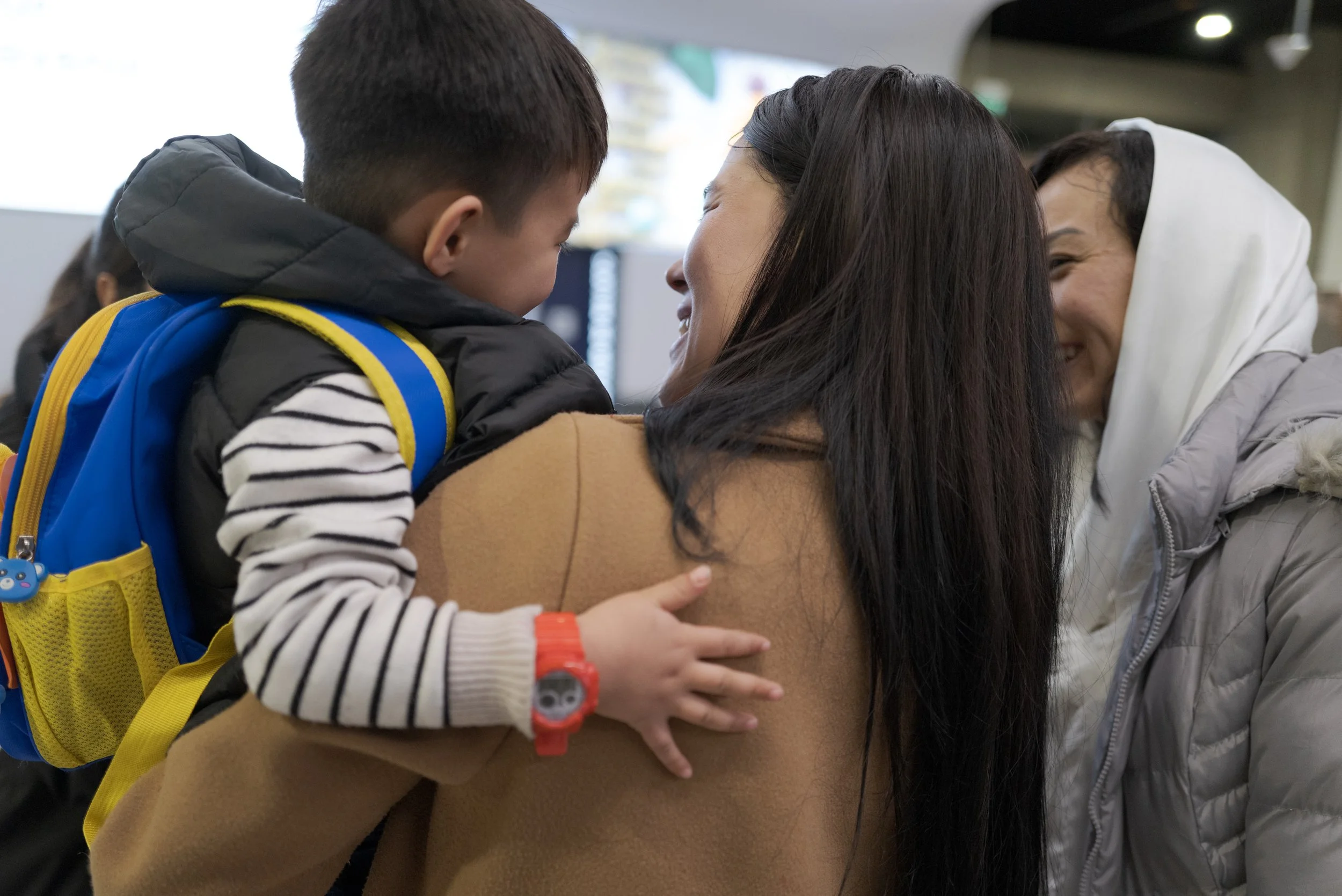
Photo: Two Afghan sisters reunited after fleeing Taliban persecution, ©Fabrice Tellier for Safe Passage International
Immigration policy can be incredibly complex—but you don’t need to be a legal expert to engage with your MP. Still, it can help to have a basic understanding of how safe routes and family reunion work, and why they urgently need fixing.
What’s the problem?
“Safe routes” are immigration arrangements that allow access to the UK for humanitarian reasons. These routes are opened by the UK government so that people can travel officially and safely for the purposes of claiming asylum and getting protection as a refugee. This could be via a visa or permission to come travel to the UK without a visa.
But right now, these routes are extremely limited—and for most refugees, simply don’t exist. That leaves people with no choice but to risk their lives on dangerous journeys.
2
You must be in the UK to claim asylum
There’s currently no visa for seeking asylum. That means refugees can’t apply for protection until they’re physically here—but most can’t get here safely or legally.
1
Most people don’t have a safe way to reach the UK
Most safe routes to the UK, like the Ukraine or Afghan schemes, are limited to specific nationalities. Others fleeing places like Gaza or Sudan have virtually no way to reach safety here, leaving smugglers as the only option.
3
Safe routes save lives
When refugees are given safe alternatives, they will use them over deadly journeys. But right now, there’s almost none. 2024 was the deadliest year on record for Channel crossings, with at least 69 lives lost, including children.
What can we do?
Refugees’ only options shouldn’t be to either stay in danger away from their loved ones or turn to smugglers. The UK government must give them a safe alternative by:
Expanding family reunion rules so child refugees can reunite safely with their refugee parents in the UK — a right that suspended by this government in September 2025. Right now, it’s also extremely difficult for children to join their siblings, aunts, uncles, or grandparents in safety, even when they have no other loved ones left.
Create a refugee visa to give people who need protection a safe way to travel to the UK and apply for asylum. Polls show over half of the UK public would support this, yet the government has continued to rule this out as an alternative to dangerous journeys.
Work with other European countries to prevent deadly journeys. After the loss of vital safe routes since Brexit, we need governments to work together on compassionate immigration policies, focused on letting families reunite safely rather instead of pushing refugees out.

Iyad’s story
At just 13, Iyad*’s world was turned upside down when an Israeli airstrike claimed the lives of his parents, siblings, and grandparents. Left severely injured, his only hope was to join his uncle in the UK.
Iyad was fortunate to be evacuated to Egypt on medical grounds. There, with our support, he began the difficult legal process of reuniting with his uncle. After months of challenges and multiple surgeries, Iyad finally arrived in the UK to start rebuilding his life.
But stories like Iyad’s are rare, as most Palestinian refugees face immense barriers to reunite with loved ones in the UK, many simply unable to escape.
*Alias used to protect his identity
What your MP can do
Whether your MP is sympathetic or undecided, there are meaningful steps they can take right now to stand up for refugees. That includes:
-
An amendment on safe routes has already been put forward in the Border Security Bill, and we’re expecting more soon. Your MP can use their vote to support these changes — help them see why these issues matter to their constituents.
-
Your MP can raise the importance of safe routes in Parliament session or in public statements, apply for their own debate or question Ministers on the issue.
-
…or meeting with and/or writing to any other relevant Ministers to share your concerns.
-
Your MP can work with other MPs to build momentum for key amendments and/or push their party to back key amendments.
-
For example, by attending community events, meeting with refugee groups, or sharing your message on social media.
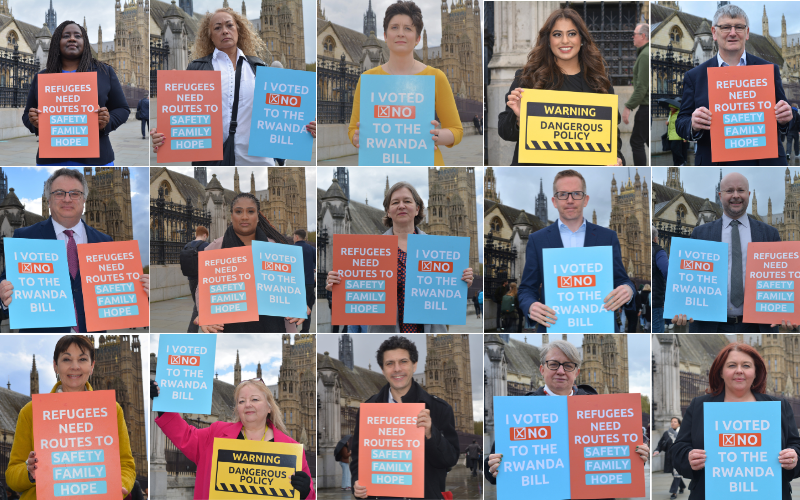
Photo: MPs posing in Westminster with “Refugees need Routes To Safety” and “I voted No to the Rwanda Bill” signs, ©Safe Passage International
Here are suggested asks when meeting or writing to your MP:
➡ Will you raise my concerns with the Immigration Minister or Home Secretary?
➡ Will you speak in Parliament about why safe routes matter?
➡ Will submit a Parliamentary Question on this issue?
➡ Will you attend a meeting with other local constituents/our community group to hear our concerns?
How to engage your MP, step-by-step
In this section, we give you an overview of the different ways you can engage your MPs. Click on the sections below to learn more, or just keep on scrolling:
💡 Pro tip: Before writing to your MP or asking them to meet, do some research! Use the ‘They Work For You’ website to see their voting record and have a look at their social media pages to find out more about them. This helps provide a picture of who they are, what they’re passionate about, what they’ve advocated for in the past.
Watch our short video for a quick tutorial on researching your MP >>
Writing to your MP
Why write to your MP?
MPs receive hundreds of standard emails through digital campaigning tools, and while these help show the scale of public concern, a unique, thoughtful letter stands out. It shows you're deeply invested and makes it harder for them to ignore or give a generic reply.
💡 Pro tip: Consider writing a joint letter with multiple signatories, especially if you're part of a local group, community organisation or faith community.
How to structure your letter
The most important thing is that you make the letter your own – your MP needs to understand why this issue matters to you! But we’ve included a suggested structure and some paragraph starters to help you get started. You can also refer to other sections on this page for information about the Bill and safe routes that you might want to share with your MP.
-
Say you’re a constituent (include your postcode!) and briefly share who you are – e.g a parent, teacher, nurse, community volunteer.
→ “I’m writing as your constituent and as someone deeply concerned about…”
-
Mention new changes to family reunion and your concerns for people seeking safety. If relevant, say you’re following up on a previous email or the MP’s reply.
→ “I’m aware the government has suspended a vital safe route for children fleeing war and persecution, Refugee Family Reunion, through Parliament and wanted to share my concerns with you because…”
→ “You may have received my previous email, but I wanted to follow up with this personal letter. I was disappointed that your reply did not address the importance of family reunion. I wanted to explain why this matters…”
-
Personal stories or local experiences are powerful — mention family, work, values, or your community. If you’ve worked with refugees or seen the impact of family separation, include that.
→ “As a parent, I cannot imagine being separated from my children – and yet many refugees face this every day…”
→ “As a person of faith, I believe we have a duty to…”
→ “I personally volunteer with refugees and through this experience I know that…”
-
Be specific and clear, for example:
→ “Will you speak up for child refugees in Parliament?”
→ “Will you write to the Home Secretary urging her to restore Refugee Family Reunion?”
-
Say you’re keen to know where they stand and ask them to reply to your letter or to meet in person to discuss your concerns further.
Additional tips for impact
Keep it to one page, if possible, but meaningful content matters more than worrying about how long it is
Be polite and constructive, even if your MP has a different view
Avoid jargon – speak from the heart
Mention if you’re writing as part of a local campaign, or alongside others in the area
Make your letter extra memorable by hand-delivering it to your MP’s constituency office or surgery!
Meeting with your MP
Meeting your MP in person can be one of the most powerful ways to influence their views and actions. A face-to-face conversation allows you to share your concerns directly, build a relationship, and ask for meaningful commitments.
Requesting a meeting
There are two ways to meet your MP. Expand the sections below to find out more:
-
Find out who your MP is and how to get in touch with them on the Parliament website
Include your full address so they know you're a constituent – MPs often won’t reply without it
Make it personal – explain why this issue matters to you
Keep it constructive – thank them for any past support and be respectful, even if you disagree
Follow up – if you don’t hear after a week or two, send a polite follow-up or call your MP’s office
-
These are regular slots (usually Fridays or weekends) where MPs meet with constituents to hear their concerns. Check your MP’s website or call their constituency office for surgery dates and how to book. You can find constituency phone numbers on the UK Parliament website.
Be prepared to provide a summary of why you want a meeting and your key concerns.
Don’t be discouraged if it takes a few tries – MPs can be hard to pin down, but persistence pays off!
Prepping for the meeting
A little prep goes a long way. Here are some tips on how to get ready for your meeting with your MP:
Do your research. Find out what issues they care about and their voting record. Check out their website, the Parliament website, or They Work For You. Scroll back up for a quick video tutorial.
Understand their influence. Do they have connections in government? Are they part of a committee or hold a party role? They could use these connections to influence.
Know their background. It’s useful to know any past jobs, interests or relevant experience they have. For example, if someone has worked in conflict zones or international development, then you could use that as a hook.
Prepare an agenda and set clear goals. What are your top 2-3 messages and asks?
Practice. Rehearse what you’ll say and be prepared for counter-arguments.
Bring materials, like briefings, reports, or a letter co-signed by your group. Check out our ‘Additional resources’ section.
Who will you bring? If meeting as a group, make sure you prepare together. Agree a game plan, or have a script so that everyone has a role.
You’re in the meeting — now what?
Be friendly and constructive. You are trying to build a relationship with your MP. Find out what their values are and use that to come together on issues. Appreciate them for the things they have done and challenge them on what they haven’t.
Give your MP the chance to respond and listen actively to them. This is a great opportunity to learn what might be holding them back on speaking up for safe routes – make sure to write it down so you can respond on the spot or after the meeting.
Come prepared with evidence, statistics and stories (your own, or others’). Providing evidence and real-life accounts will help to persuade your MP that these issues are important and urgent.
Make clear requests and be concise. Be clear on what you want them to do next. Can they commit to making changes? E.g. by voting, raising the issue in Parliament, sharing about the issue on social media, visiting somewhere in your community...
Ask for their insider knowledge. Sometimes a Minister is not the actual person behind a decision, so you could ask questions about who else needs to be influenced and who we need to build a relationship.
Be mindful of time. Meetings are often short, so stay on track. Where possible, try building relationships with staff present too – they can be key allies!
Other ways to engage your MP
Campaigning can feel intense and overwhelming, and traditional methods like protests aren’t always accessible to everyone. In today’s world, creative tactics are also key to cutting through the noise and making your message stand out.
Why not try something different? We’ve shared some ideas for creative campaigning, but if you’ve got your own, feel free to reach out—we’re here to help!
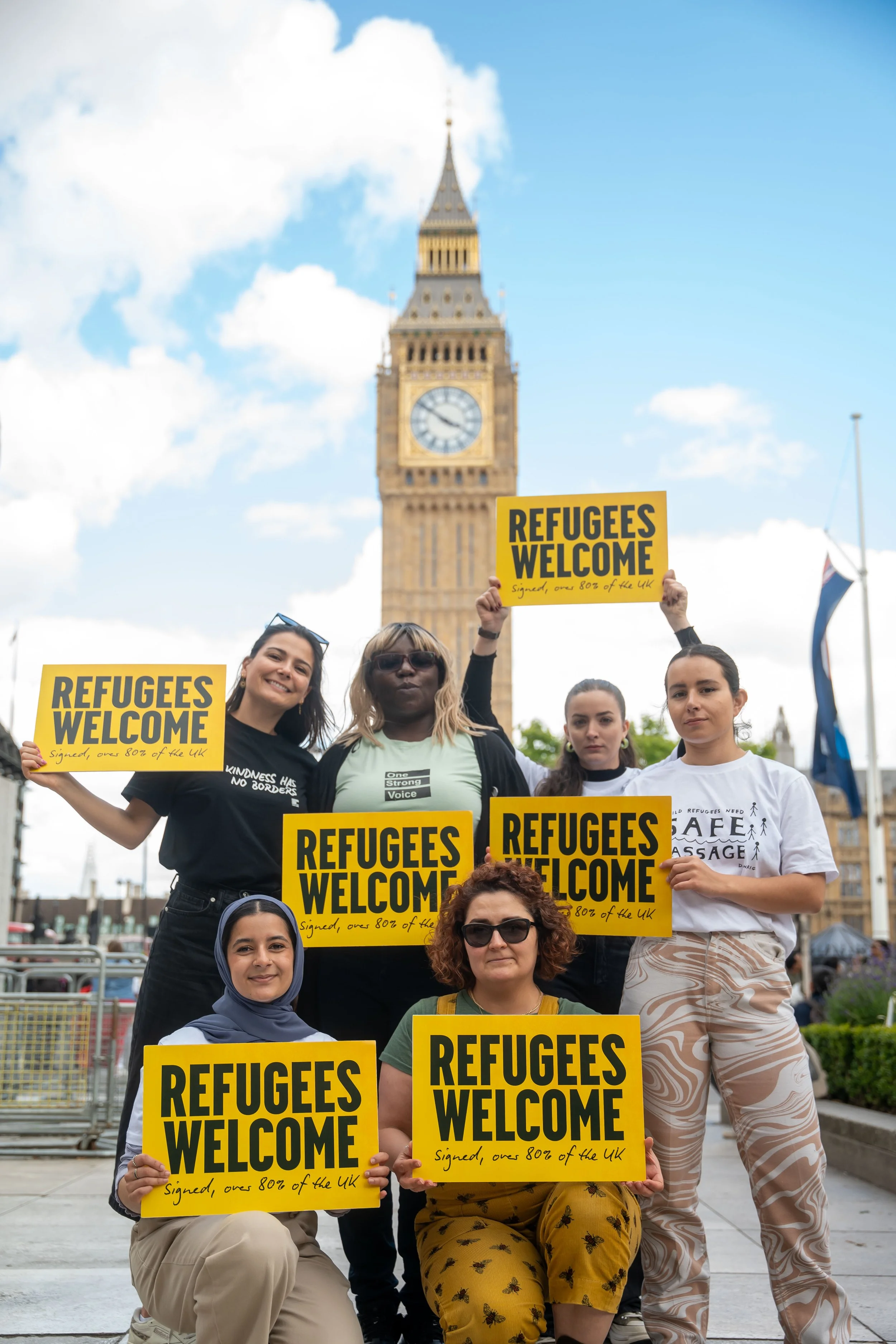
Grab your MPs attention on social media. MPs and their teams usually spend a lot of time on social media, so it’s a great tool to share your thoughts with them. Make sure to tag them and to keep it short and clear. You could also organise a “social media storm”, asking several people to post or tag them at the same time to build up pressure. You can use our Together Not Torn social media pack for inspiration.
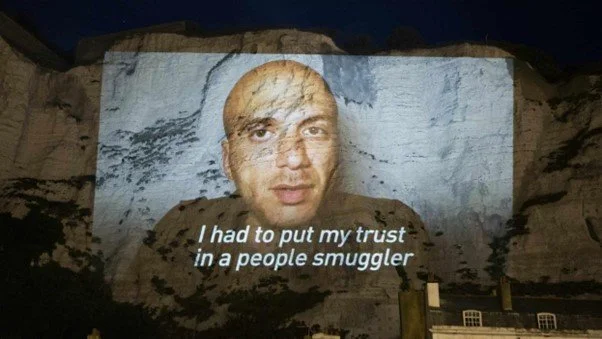
Organise a stunt. Images speak louder than words — that’s why stuns are really powerful. For example, you could organise an installation with shoes or backpacks to symbolise the journeys people make to reach safety. If you’re a bit more adventurous, why not project a powerful video somewhere meaningful, like Led By Donkeys did onto the white cliffs of Dover?
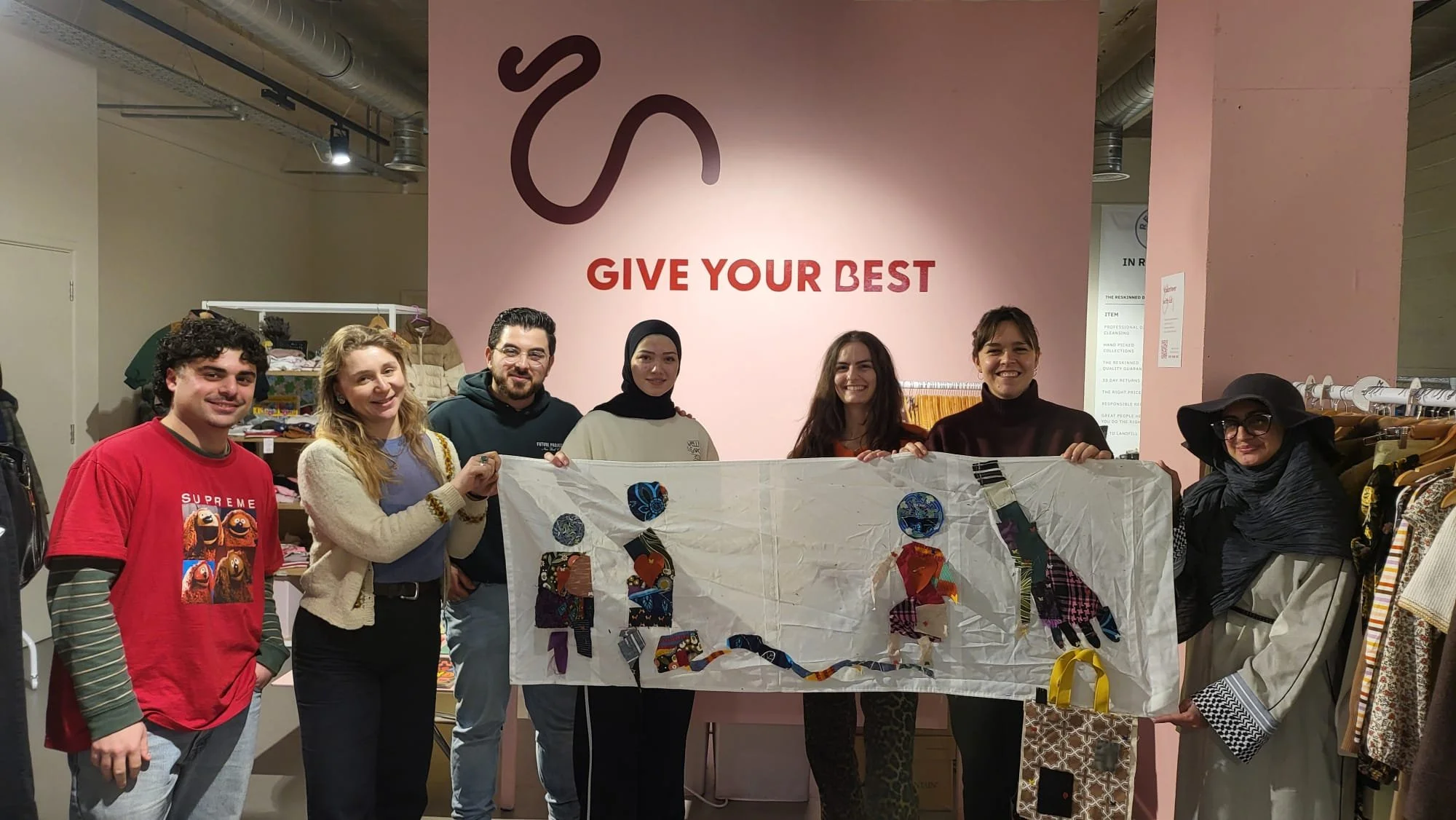
Get creative. Art is a universal language that can be used to convey a strong political or social message, whether using painting, installations, or the power of words, like the Routes To Home poem our wonderful Young Leaders wrote. You could also take inspiration from our Fabric of Solidarity, which local campaigners stitched together using fabric from different cultures.
What your MP might say, and how to respond
If you're about to meet your MP, or have already written to them and received a reply, this section will help you prepare for common objections and how to respond effectively.
Take what feels useful, rework it in your own words, and remember: the more personal your argument, the more powerful it will be. MPs are much more likely to listen when they see that real people in their constituency care deeply about child refugees and the need for safe routes.
Expand the sections below to see examples of common MP arguments and suggested responses.
-
Current safe routes are very limited. They are designed predominantly around specific wars or crises, with hugely varying levels of success. For example, after the outbreak of war in Ukraine, two safe routes to the UK specifically for Ukrainians were opened and only five Ukrainians have ever made the journey across the Channel, despite over 200,000 Ukrainians arriving safely. The Ukraine schemes are well-resourced and flexible and have been shown to effectively break the business model of the smugglers by cutting demand for dangerous journeys. However, the Afghan resettlement schemes introduced after the Taliban took over Afghanistan in 2021, remain deeply flawed with unfulfilled promises and bureaucratic hurdles that have left so many Afghans in vulnerable positions.
Most people still have no access to safe routes. For the vast majority of potential asylum seekers in war-torn countries, the only way to claim asylum in the UK is to put themselves at the mercy of the gangs, and to go on a small boat to get across the channel. There is no safe route, for example, for Palestinians, Eritreans or Sudanese people. There is just nothing available.
Trying to disrupt irregular migration routes without providing safe alternatives only forces refugees to take greater risks. The real issue is that there is no way for refugees to apply for asylum before they’re in the UK, and relying on smugglers is often the only way to get here. That wouldn’t be the case if there were functioning safe routes – and the Ukraine schemes showed this is possible.
-
Family reunion is a key safe route, which is why I’m concerned about how restricted and limited it is. The UK’s family reunion rules are broken and there is a huge gap that we need to address. If a child is orphaned or separated from their parents and has family in the UK, they are prevented from joining a refugee sibling, grandparent or uncle or aunt in the UK. Evening joining their mum or dad will now be made more difficult with the government’s restricting of Refugee Family Reunion.
Our system wasn’t always this harmful, and it doesn’t have to be. Previously, a child with family in the UK who was seeking asylum in the European Union (EU) could be transferred to the UK under Dublin III Regulations to have their claim processed here with family, but the UK is no longer party to the Dublin Regulations. While the UK’s own Immigration Rules should also allow for children to safely join family in the UK, this route is largely inaccessible because of huge fees and requirements imposed on the refugee family member in the UK. Right now, this gap is keeping families apart.
Children are particularly likely to resort to people smuggling when access to family reunion is delayed or at risk. Over the past two years, almost 60% of Safe Passage International's new cases of unaccompanied children in France being supported to reunite with family in the UK have gone missing having lost faith in the legal process and are most likely to have travelled to the UK irregularly.
Considering how important family reunion is, as my MP, what will you do to stand up for refugee family reunion and make sure that this safe route is expanded?
-
By opening safe routes, we could act to prevent children risking their lives coming to the UK via dangerous journeys. The changes we are proposing would support a relatively small number of children with estimates of 230-340 children arriving per year. This would go some way towards replacing the safe route lost when the UK ceased to be party to the Dublin Regulations after Brexit, without having to engage in complex state-to-state negotiations. It would also simplify the decision-making process for caseworkers at the Home Office, who would no longer need to assess complex rights-based applications from refugees seeking to demonstrate exceptional circumstances.
As as a global leader, we have a responsibility to support child refugees. These children have family in the UK who can care for them and I would welcome the Government in stepping up, offering sanctuary to those young people. In [add the name of your local area], we are proud to welcome child refugees in our local community.
As my MP, will you support the calls for expanding family reunion?
-
Providing safe routes is the best way to prevent dangerous journeys and tackle smuggling. All the evidence shows that policies that rely on deterrence to prevent refugees from taking dangerous journeys do not work. Such policies do not address why people come here - for family, community, and to rebuild their lives.
Tougher enforcement and border policing without safe alternatives often end up punishing refugees, not smugglers. Many refugees are coerced or pressured by smugglers into “helping” during the journey — yet they are the ones facing prosecution and imprisonment. Meanwhile, those profiting from their desperation are left untouched.
While targeting smugglers makes sense, this shouldn’t be come at the expense of refugees’ basic rights and safety. Recent Home Office data even shows that increased border enforcement has led smugglers to cram more people, including children, onto boats to avoid detection, with the tragic consequences that we know. This is what deterrence-focused policies without real alternatives to smugglers produce.
As my MP, will you support expanding safe routes and urge the Home Secretary to prioritise policies that save lives and genuinely tackle smuggling, rather than punishing refugees?
-
Recent research shows most people still want to welcome refugees, 84% believe people should be able to take refuge in other countries, to escape from war or persecution. Polling after the 2024 election also found that 50% of people backed the introduction of a visa scheme to allow people with strong asylum claims to travel here to claim asylum, with only 16% opposing.
Besides, this narrative ignores that most refugees don’t want to leave their homes in the first place. The vast majority of displaced people – over 70% – stay in neighbouring countries. The small fraction who make it to the UK often do so because they have family here or language and community ties. As a global leader, it’s our moral responsibility to offer safety and a chance to rebuild their lives.
While political rhetoric often paints migration as a “burden”, the evidence tells a different story. Refugees and migrants contribute enormously to our country — they work in vital industries, pay taxes, fill labour shortages, start businesses, and enrich our communities. As one of your constituents, I hope you’ll push back against divisive narratives and recognise the value migration brings and the importance of keeping families safe and together.

Keeping the pressure on
You’ve got your MP’s attention—amazing! Whether you’ve met with them or received a response to your letter, it’s crucial that you follow up and stay on their radar. Here are our top tips for success:
Send a thank-you email. Recap what you discussed and any commitments they made, and include any extra information you promised to send.
Let us know how it went by emailing us at campaigns@safepassage.org.uk. We always love to hear about our supporters’ experiences, plus it helps us map out allies in Parliament!
Share resources. If your MP is interested in learning more, feel free to include links to our briefings, reports, or factsheets. Drop us an email if you need help finding the right one.
Hold them accountable. If your MP has agreed to take action, check back in a couple of weeks later to see if they’ve made any progress.
Thank them. MPs often get a lot of criticism, so a little bit of praise goes a long way! If they’ve done what they had committed to, make sure to appreciate them.
Loop in others – If you’re part of a group, it might be useful to share updates with them and plan a second action if your MP hasn’t followed through.
Be persistent. Change often takes time, and even with your best efforts, you might not get the result you want right away. Continuing to follow up shows you’re serious about seeing change and helps keep refugee rights on your MP’s agenda.
Make some noise!
Sharing your action publicly helps amplify your message and encourages others to take action too. Here are just a tips for extra impact:
Ask for a photo with your MP when you meet with them. Share it on social media (with their consent) and use this as an opportunity to encourage others to lobby their MPs too.
Bring a sign — for example, Refugees welcome” or “Families Belong Together” or “Safe routes save lives” . You could even ask your MP to pose with it, and send the image to your local paper.
Hand your letter in person. You could also share a copy of the letter on social media, or film yourself reading it out loud and post the video.
Tag us and tag your MP so we can reshare your post and help it reach a wider audience!

Additional resources
You’ve now got everything you need to influence your MP on the Border Security Bill and make sure they know you care about safe routes and refugee rights.
If you’d like to go even further, we’ve included some helpful resources for you to read or print and share with your MP: